








Back Pain Relief: 7 Proven Exercises for Immediate Comfort
Introduction
In today’s fast-paced world, where sitting has been called “the new smoking,” our bodies are paying the price. Spines that were designed for walking, bending, lifting, and stretching now spend eight, ten, even twelve hours a day compressed into chairs.This chronic underuse leads to muscle imbalances, weakened core support, and stiff joints a perfect storm for back pain.Yet despite this, many still believe that rest is the answer. While short-term rest may ease acute flare-ups, long-term relief comes not from stillness, but from intelligent motion.
This article isn’t about quick fixes or miracle cures.It’s about sustainable, science-backed strategies that restore function, reduce discomfort, and reclaim your quality of life.We’ll explore seven proven exercises each grounded in physical therapy principles and supported by clinical research that target the root causes of back pain. More importantly, these movements are accessible.You don’t need fancy equipment, a gym membership, or hours of free time.Just a few minutes a day can make a profound difference in how you feel, move, and live.
And woven throughout this journey is a deeper truth: true health isn’t just the absence of pain.It’s vitality. It’s freedom.It’s being able to pick up your child without wincing, walk through a park without stiffness, or simply enjoy a night of restful sleep.That kind of health isn’t reserved for athletes or yoga masters it’s within reach for anyone willing to take small, consistent steps toward healing.Let’s begin.
Table of Contents
Why Movement Heals: The Science Behind Back Pain Relief
Before diving into the exercises, it’s essential to understand why movement works.For decades, the default response to back pain was bed rest.Doctors advised patients to stay off their feet, avoid activity, and wait for inflammation to subside. But modern research tells a different story.A landmark study published in The Lancet found that patients who remained active recovered faster and had better long-term outcomes than those confined to bed rest.
Why? Because movement stimulates blood flow, delivering oxygen and nutrients to damaged tissues. It also helps lubricate spinal joints, reduces muscle spasms, and re-trains the nervous system to interpret signals correctly, turning down the volume on pain over time.In essence, motion is medicine for the spine.
Moreover, exercise strengthens the deep stabilizing muscles of the core particularly the transverse abdominis, multifidus, and pelvic floor which act like a natural corset for your spine. When these muscles are weak or inactive (a common issue in sedentary lifestyles), the burden shifts to ligaments, discs, and facet joints, increasing strain and risk of injury.
But not all movement is created equal.Some activities can aggravate existing conditions, especially if performed incorrectly. That’s why the following seven exercises were chosen with care: they’re low-impact, easy to modify, and specifically designed to decompress, stabilize, and mobilize the spine safely.
Each one serves a purpose whether it’s releasing tension in tight hamstrings (a major contributor to lower back strain), improving posture through thoracic mobility, or reactivating dormant core muscles. Together, they form a holistic routine that supports lasting relief and builds resilience against future episodes.Now, let’s dive into the first exercise, one so simple, yet so transformative, it’s used by elite athletes and rehabilitation clinics alike.

1. Cat-Cow Stretch: Waking Up the Spine
Begin on your hands and knees, wrists aligned under shoulders, knees under hips.This is the starting position for the Cat-Cow Stretch, a gentle yoga-inspired movement that gently warms up the entire spine.
Inhale deeply as you drop your belly toward the floor, lift your chest and gaze upward (Cow Pose).Feel the subtle arch in your lower back, the expansion across your collarbones.Then, as you exhale, round your spine toward the ceiling, tucking your chin to your chest and drawing your navel toward your spine (Cat Pose).Move slowly, coordinating breath with motion.Repeat for 1–2 minutes.
This rhythmic flexion and extension does more than just loosen stiff vertebrae. It enhances segmental mobility, the ability of each spinal joint to move independently which is crucial for preventing compensatory strain elsewhere. Over time, restricted segments can force adjacent areas to overwork, leading to wear and tear.The Cat-Cow helps prevent this domino effect.
Additionally, this stretch activates the diaphragm and encourages mindful breathing both of which play a role in reducing muscular tension. Stress and shallow breathing trigger the sympathetic nervous system (“fight or flight”), causing muscles to tighten reflexively.By slowing down and syncing breath with movement, you engage the parasympathetic system, promoting relaxation and pain modulation.
For those new to exercise or recovering from an episode, Cat-Cow is an ideal entry point. It requires no strength, only awareness.And yet, its benefits ripple outward improving posture, enhancing coordination, and laying the foundation for more advanced movements.
2. Child’s Pose: Deep Release for Tension Relief
From hands and knees, sit your hips back toward your heels, extending your arms forward and lowering your forehead to the mat.This is Child’s Pose, a restorative posture that offers deep release along the spine, hips, and shoulders.
Allow your breath to deepen.With each exhale, imagine your spine softening, your tailbone sinking toward your heels.If your hips don’t comfortably reach your heels, place a folded blanket or pillow beneath them for support.
Though passive in appearance, Child’s Pose plays an active role in back pain management.It gently stretches the paraspinal muscles the long bands running alongside the spine which often become hypertonic (overly tight) due to poor posture or stress. It also decompresses the lumbar discs, creating space between vertebrae and relieving pressure on nerves.
Importantly, this pose fosters body awareness.Many people with chronic back pain have lost the connection between mind and muscle. They may not realize they’re holding tension until it becomes unbearable. Holding a child’s pose for several minutes trains the brain to recognize and release unnecessary contractions, a skill that translates directly into daily life.Use this as a reset button. Whenever your back feels stiff or sore, return to this pose. Let it be a reminder that healing includes moments of surrender.
3. Pelvic Tilts: Reawakening Core Stability
Lie on your back with knees bent, feet flat on the floor hip-width apart, arms relaxed at your sides.This is the setup for Pelvic Tilts, a foundational movement for core activation and pelvic alignment.
As you exhale, gently press your lower back into the floor by contracting your abdominal muscles and tilting your pelvis upward.Avoid lifting your buttocks and focus only on flattening the natural curve of your lower spine.Then, inhale and slowly release, allowing your back to return to its neutral position.Repeat 10–15 times.
Pelvic tilts may seem too simple to matter, but they’re a cornerstone of spinal rehab. They teach control over the pelvis, the base of the spine and reactivate the transverse abdominis, the deepest layer of core musculature responsible for stabilizing the trunk during movement.
Weakness here is often invisible; you won’t see it in the mirror, but you’ll feel it when bending, twisting, or standing for long periods.By practicing pelvic tilts regularly, you rebuild neuromuscular communication, the brain’s ability to “turn on” the right muscles at the right time.
This exercise is especially beneficial for postpartum women, office workers, and older adults groups prone to anterior pelvic tilt and associated lower back strain.Start slow, focus on precision, and progress only when control feels effortless.
4. Knee-to-Chest Stretch: Soothing the Lower Back
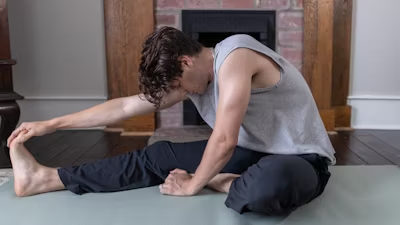
Still lying on your back, bring one knee toward your chest, clasping your hands around the shin or thigh. Keep the opposite leg extended or bent with your foot on the floor.Gently pull the knee closer, feeling a stretch in the glute and lower back.Hold for 20–30 seconds, then switch sides.Optionally, bring both knees to the chest together for a full lower back release.
Known as the Knee-to-Chest Stretch, this movement targets the piriformis, glutes, and erector spinae muscles that frequently contribute to sciatica-like symptoms when tight.It also promotes sacroiliac joint mobility and calms irritated nerve roots.
One key benefit is its adaptability.Those with limited flexibility can use a towel or strap to assist the pull.Individuals with hip issues can keep the non-stretching leg bent.There’s no one-size-fits-all version, only what feels safe and effective for your body.
Perform this stretch after prolonged sitting or before bed to ease nighttime discomfort. Paired with diaphragmatic breathing, it becomes a powerful tool for unwinding both physically and mentally.
5. Bird-Dog: Building Balance and Coordination
Return to hands and knees.From this position, slowly extend your right arm forward while simultaneously straightening your left leg behind you.Keep your core engaged, spine neutral, and hips level.Hold for 3–5 seconds, then return to center.Repeat on the opposite side.
Welcome to the Bird-Dog, a dynamic stability exercise praised by physical therapists for its ability to improve balance, coordination, and spinal control.Unlike isolated strength moves, Bird-Dog challenges multiple systems at once: motor control, proprioception (body awareness), and anti-rotation core strength.It forces the body to resist unwanted movement, a critical skill for protecting the spine during real-world activities like lifting groceries or playing with kids.
Research shows that individuals with chronic low back pain often exhibit delayed firing of core stabilizers during limb movement.Bird-Dog retrains this timing, helping muscles fire in the correct sequence to protect the spine.
Start with small ranges of motion.Focus on keeping your torso still no rocking or twisting.As strength improves, increase hold time or add repetitions.For added difficulty, try closing your eyes to challenge balance further.Do this daily, and you’ll notice improvements beyond pain relief: better posture, increased confidence in movement, and greater endurance.
6. Glute Bridge: Activating Your Powerhouse
Lie on your back, knees bent, feet flat on the floor near your glutes.Arms rest at your sides, palms down.Engage your core, then press through your heels to lift your hips toward the ceiling. Squeeze your glutes at the top, forming a straight line from shoulders to knees.Avoid overarching the lower back.Lower slowly and repeat for 10–15 reps.
The Glute Bridge might look like a glute workout and yes, it powerfully activates the gluteus maximus but its impact on back health is profound.Weak glutes force other muscles, particularly the hamstrings and lower back, to compensate during walking, climbing stairs, or standing up.This overload contributes significantly to mechanical back pain.
By strengthening the glutes, you restore proper biomechanics.Every time you rise from a chair or climb stairs, your body will rely less on strained back muscles and more on powerful hip extensors.
Additionally, the bridge reinforces pelvic stability and teaches posterior chain engagement essential for maintaining upright posture and reducing disc pressure.For an extra challenge, try single-leg bridges once the bilateral version feels easy. Or add a resistance band above your knees to activate the glute medius, which supports lateral stability.
7. Piriformis Stretch (Seated Figure-Four): Unlocking Sciatic Relief
Sit on the edge of a sturdy chair.Cross your right ankle over your left thigh, just above the knee. Sit tall, then hinge slightly forward from the hips until you feel a deep stretch in your right buttock.Hold for 30 seconds, then switch sides.
This is the seated version of the Piriformis Stretch, often referred to as the “figure-four” due to the shape your legs form.The piriformis is a small, deep muscle that runs from the sacrum to the femur, passing near the sciatic nerve. When tight or inflamed, it can compress the nerve, causing radiating pain down the leg, a condition known as piriformis syndrome.
Stretching this muscle regularly can alleviate sciatic symptoms and improve hip rotation.It’s particularly helpful for runners, cyclists, and anyone who sits for long periods.
If the stretch feels too intense, keep your back straight and reduce the forward lean.You can also perform this lying down: lie on your back, cross one ankle over the opposite knee, and gently pull the uncrossed leg toward your chest.Consistency is key.Even two to three times per week can yield noticeable improvements in comfort and mobility.
Putting It All Together: A Daily Routine for Lasting Relief
Now that you’ve learned the seven exercises, here’s how to integrate them into a cohesive routine:
- Now that you recognize the seven exercises, right here’s a way to combine them into a cohesive habitual:
- Start with Cat-Cow (1-2 mins) to heat up the spine.
- Come to the child’s role (1 minute) Release the anxiety.
- Pelvic Tilt (10-15 reps) Activate middle management.
- Knee to chest (30 seconds on every facet, then each collectively) stretch the decrease returned.
- Bird-Dog (eight-10 reps depending on element) Create balance.
- Glute Bridge (10-15 reps) Strengthen the posterior chain.Piriformis Stretch (30 seconds each issue) Relieves tightness in sciatica.
Perform this sequence daily, ideally in the morning or after prolonged sitting.Each session should take no more than 15–20 minutes.Listen to your body, never push into sharp pain.Discomfort is normal; injury is not.
Over time, you’ll likely notice reduced stiffness, improved posture, and fewer flare-ups.These aren’t miracles, they’re the result of consistent, intelligent care.
Beyond Exercise: Cultivating Lifelong Back Health
While these exercises are powerful tools, true healing extends beyond the mat.Sustainable back health involves lifestyle choices: ergonomic workstations, supportive footwear, mindful lifting techniques, and stress management.
Consider your daily habits.Are you slouching on your phone?Sleeping in a twisted position?Carrying bags on one shoulder?Small adjustments compound into big changes.Also, remember that emotional health and physical health are intertwined.Chronic stress increases muscle tension and lowers pain thresholds. Practices like meditation, journaling, or talking therapy can complement physical routines, offering a more complete path to wellness.
Above all, embrace progress over perfection. Healing isn’t linear.Some days you’ll feel great; others, pain may return.That’s okay.What matters is showing up for your body, your movement, and your long-term health.Because back pain doesn’t define you.How you respond to it does.And every time you roll out your mat, breathe through a stretch, or strengthen a forgotten muscle, you’re choosing resilience.You’re investing in a future where movement is not feared, but celebrated.That’s not just pain relief.That’s health humanized, empowered, alive.
Q: How often should I do these back pain exercises?
A: For best results, perform them daily or every other day. Start with 1–2 sets of 10–15 seconds per stretch, gradually increasing as comfort improves.
Q: Can these exercises help with sciatica?
A: Yes especially the piriformis stretch and knee-to-chest moves, which reduce pressure on the sciatic nerve. Always move gently and avoid any sharp pain.
Q: When should I see a doctor for back pain?
A: Seek medical advice if pain persists beyond two weeks, radiates down your leg with numbness, or is accompanied by fever, weakness, or loss of bladder control.